 Ghost Tours Edinburgh Scotland
Mary King's Close: The Real Story Under the City Chambers
Mary King's Close is the buried 17th-century street beneath the City Chambers on the Royal Mile, and it is the stop most visitors to Edinburgh argue about afterwards. This guide separates the documented record from the legends. You get the history of the close and the woman it is named after, the truth about the 1645 plague and the walled-in story, the real origin of the Annie doll room, and the practical detail on the one-hour guided tour, the opening hours and the rules on photos. When you are ready to go underground, check availability for the Real Mary King's Close before you arrive, because tours leave about every 10 minutes. The bookable tours are compared on ghost tours in Edinburgh.
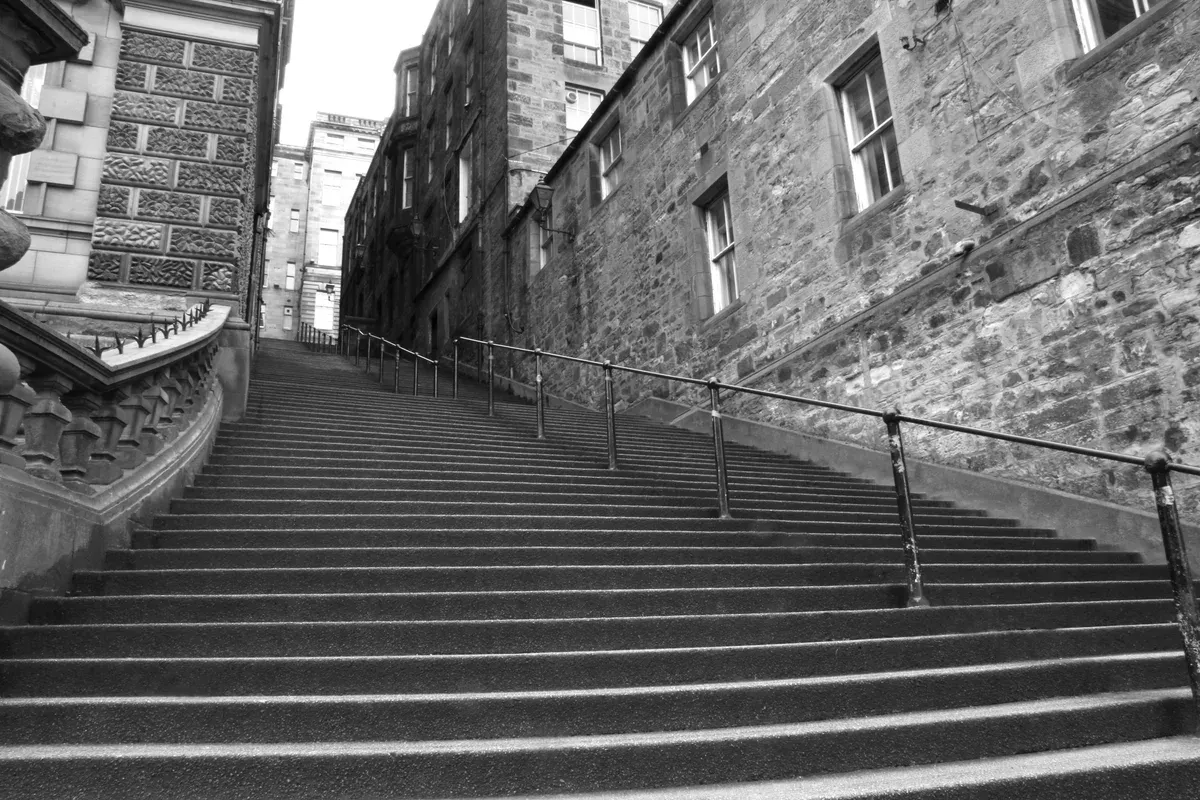
Warriston's Close drops from the High Street beside the Real Mary King's Close entrance. Photo: Ronnie Macdonald from Chelmsford, United Kingdom, CC BY 2.0, via Wikimedia Commons
Quick answer The short answer
The Real Mary King's Close is a guided one-hour tour of a 17th-century street buried under the City Chambers on the Royal Mile since 1753, entered at 2 Warriston's Close. You cannot walk in without joining a tour. Costumed guides lead groups down through the surviving rooms, and tours leave about every 10 minutes through the day in a site open seven days a week. The ghost stories, including Annie's doll room, are told on the tour, but only the history is documented.
Key takeaways
- The close was named for Mary King, a widow and fabric trader who lived there in the 1630s, and it was buried in 1753 when the Royal Exchange was built on top. Read the full record in the history section.
- The story that 600 plague victims were walled in to die in 1645 is a myth. Historians say victims were cared for. See the plague section.
- The Annie story dates to a 1992 visit by one Japanese psychic, Aiko Gibo. There is no historical record of a girl named Annie in the close.
- If the official tours are sold out, the underground alternatives are the South Bridge and Blair Street vaults. Compare them in the guide to the Edinburgh Vaults.
Mary King's Close: What the Record Shows
The close is a real, documented street with a real paper trail. Here is the timeline the sources agree on, and the story of the woman who gave the street its name.
A Timeline of the Close
The dates below come from the historical record of the close and from the attraction that runs tours today. They cover the street from its years as a living thoroughfare to its burial and its modern reopening. The key dates are the 1753 demolition, when the Royal Exchange went up over the surviving buildings, and 1902, when the last resident finally moved out.
| Year | What happened |
|---|---|
| 1630s | Mary King, a widow and mother of four, trades in fabrics from the close and becomes a prominent businesswoman. |
| 1753 | The close is partly demolished and buried when the Royal Exchange, today the City Chambers, is built over it. |
| 1897 | Andrew Chesney, the last resident, is offered a compulsory purchase order for 400 pounds for his home. |
| 1902 | Chesney leaves the close. |
| 1994 | Ian Rankin's novel Mortal Causes uses the close as a setting. |
| Today | Continuum Attractions runs the site as The Real Mary King's Close, with one-hour guided tours from 2 Warriston's Close. |
Who Was Mary King?
Mary King was a merchant burgess of Edinburgh in the 17th century, and the close takes her name because she lived there. The record shows her as a prominent businesswoman in the 1630s. She was a widow with four children who made her living trading in fabrics.
She was not the close's only famous connection. The street sat in the densest part of the Old Town, a steep alley running off the Royal Mile between tall tenement buildings called lands. Those tenements were standard from the 16th century because the city walls left no room to spread outward, so the city grew upward instead.
The Close Under the City Chambers
In 1753 the city built the Royal Exchange, which now serves as the City Chambers, and the close was partly demolished and buried beneath it. That is why part of the street survives underground.
The last of those occupants was Andrew Chesney. In 1897 he was offered a compulsory purchase order of 400 pounds for his home, and he held out until 1902 before leaving. The close ran close to the Nor Loch, a stagnant and polluted marsh that was never a source of drinking water. Gas from the loch is said to have created eerie lights and hallucinations in the lower rooms, and that is the kind of detail that fed the haunting rumours long before any tour operator arrived. The loch itself was drained in stages, with the western end emptied between 1813 and 1820, and its bed is now Princes Street Gardens and Waverley Station.
One distinction matters when you compare sites. The official site calls this the only underground close in Edinburgh, as distinct from the Blair Street and South Bridge vaults, which are storage cellars built into the South Bridge arches rather than a buried street. If you want the vaults version of underground Edinburgh, see the separate guide to the Edinburgh Vaults.
Sources: Wikipedia: Mary King's Close, The Real Mary King's Close
The Plague of 1645 and the Walled-In Myth
This is the story most people think they know about the close, and the popular version is largely wrong. The plague was real. The walling-in was not.
Edinburgh's Worst Outbreak
The 1645 outbreak was Edinburgh's 11th recorded plague. The first Scottish outbreak had come almost three centuries earlier, in 1350, so the city had long experience of the disease and none of a cure. The close was a bad place to be when it arrived. The laigh houses, the low-ceilinged rooms at the bottom of the tenements, held up to 14 people in a single room.
The city's response was organised but stretched to breaking. Infected households were marked with white flags and their residents could not leave. The number of foul clengers, the people paid to clean infected houses, fell to just six for the entire city. Victims who died were buried in mass graves at Greyfriars, Boroughloch and Leith Links. Greyfriars is covered in the Greyfriars Kirkyard guide.
The Plague Doctors
The council appointed Dr John Paulitious as plague doctor on 23 December 1644, months before the outbreak peaked. His salary started at 40 Scots a month and rose to 100 Scots. He died of plague in April 1645.
Dr George Rae succeeded him in summer 1645 and survived the outbreak. The beaked plague suit design is credited to Charles de L'Orme in 1619.
The Walled-in Story Is a Myth
The popular story runs that the council walled up the close with 600 residents inside and left them to die. It is a good story. It is also a myth. Historians who have worked on the records of the 1645 outbreak say plague victims were in fact cared for, not abandoned behind a wall. The city had plague doctors on salary, cleaning crews, marked households and burial arrangements, which is not the record of a place that sealed its poor underground.
The myth persists because it is dramatic and because the buried street seems to confirm it. A sealed room under a government building looks like evidence. It is actually evidence of 1753, not 1645: the close was buried for commerce, not for quarantine. When a guide tells you the walling-in story on any tour of the city, the honest framing is that it is a legend. The documented suffering of 1645, the overcrowded rooms, the six remaining cleaners, the mass graves, needs no embellishment.
Sources: The Real Mary King's Close blog, Mysterious Britain
Guided Tour at The Real Mary King's Close
The attraction's own look at a guided tour through the buried close. Third-party video by The Real Mary King's Close. This site did not shoot it and has no relationship with the creator.
Annie and the Doll Room
The most told ghost story at Mary King's Close is not from the plague years. It is barely three decades old.
The 1992 Visit
The story starts in 1992, when Japanese psychic Aiko Gibo visited the close while filming a programme about haunted places in Britain. In a room off Allan's Close she said she sensed a young girl called Annie who had lost her doll and was upset. Gibo went back up to the Royal Mile, bought a doll from a shop, and left it in the room for her.
That is the whole of it. There is no historical record of a girl named Annie in the close. The tale rests on one psychic's account from a single television visit. The official attraction tells the story openly on its own website, and guides repeat it on the tour, but it is a modern legend, not documented history.
The Doll Room Today
Visitors from around the world leave dolls and toys in the room, and some police officers and fire crews leave their badges.
The original doll did not stay. It disappeared on 17 April 2019, and was later identified as a 1960s Daisy Doll designed by Mary Quant. The room is still filled with visitors' gifts. Treat the story as the modern folk tale it is. It says more about what visitors want from the close than about anything that happened there in the 17th century.
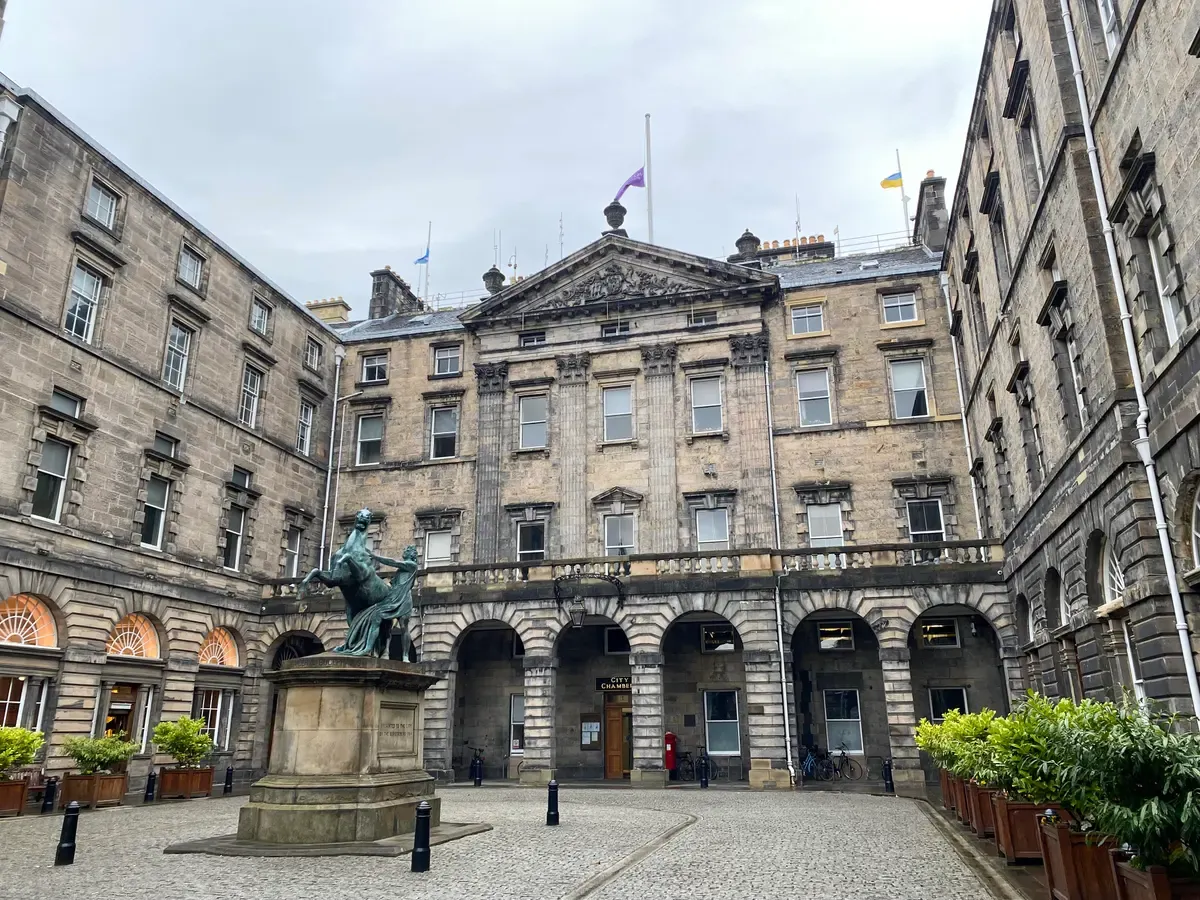
The City Chambers on the High Street sit above the buried Mary King's Close. Photo: 瑞丽江的河水, CC BY-SA 4.0, via Wikimedia Commons
Visiting the Real Mary King's Close
Everything practical you need before you book, from the address to the photo ban.
Where It Is and How to Get In
The entrance is at 2 Warriston's Close, on the Royal Mile, postcode EH1 1PG. You walk down into the close from street level, and the buried lanes sit beneath the City Chambers. You cannot wander in on your own. Every visit is a guided tour with a costumed character guide, so joining a tour is the only way in.
Tours leave about every 10 minutes through the day, so advance booking is wise. Groups of 15 or more qualify for discounted rates.
Tour Types and Length
The standard tour lasts one hour. Continuum Attractions runs the site and offers a Signature Guided Tour, a Lantern Led Tour and a 17th Century Medicine Experience. The Lantern Led Tour runs daily from 6pm between 2 October and 1 November 2026.
The medicine experience, led by the character Dr Arnott, runs Friday to Sunday through 2026, with visitors examining samples and making herbal remedies. There is also a Closes and Coffee Tour daily all year, an Above and Beyond Tour daily from 29 June to 1 November 2026, and seasonal events including a four-hour Cape Controversy dining experience and a Victorian Christmas Experience on Fridays to Sundays from 4 to 27 December 2026.
Rules, Access and Hours
Children under 5 are not allowed on the tour, for health and safety reasons. Photos and video are banned during the tour, including phones, cameras and smart glasses, so leave the camera in your pocket. A souvenir photo is taken at the end and sold afterwards.
The attraction is open seven days a week, and the official homepage showed hours of 9:30am to 10:30pm. Arrive 15 minutes before your start time. Details on stairs and step-free access are not stated in the sources checked, so contact the venue directly if access matters to you.
The official site displays no ticket price, so check the official booking page for the current figure. Tiqets sells entry with free cancellation up to 24 hours before, rated 4.6 from 227 reviews, with a live English guide and audio guides in nine languages.
If It Is Sold Out
If your slot is gone, the vaults are the nearest underground alternative. Mercat's daytime vaults tour ($36.34) takes groups of up to 18 into the Blair Street Underground Vaults for 75 minutes, and the Auld Reekie vaults and graveyard tour ($34) adds Greyfriars Kirkyard in 1.5 hours. The Edinburgh Vaults guide compares every vault option.
Sources: The Real Mary King's Close, Tiqets
Mary King's Close or the Vaults?
Both are underground Old Town spaces, and visitors mix them up constantly. They are different streets with different stories, run by different people.
The Short Version
The Real Mary King's Close is a genuine 17th-century street, buried when the Royal Exchange was built in 1753, and the official site calls it the only underground close in Edinburgh. The vaults are storage rooms in the arches of South Bridge and under Blair Street, built in the late 18th century and later abandoned by the late 19th century. One is a buried home street. The other is a network of rooms that later became slum housing.
The table below sets out the practical differences, using figures from the official Real Mary King's Close pages and from the tour listings on this site. If you want the full vault picture, read the Edinburgh Vaults guide.
Side by Side
Figures come from the official Real Mary King's Close site and the listed tours on the booking platforms.
| What | Mary King's Close | The vaults |
|---|---|---|
| What it is | A 17th-century close buried under the City Chambers in 1753 | Storage rooms in the South Bridge and Blair Street arches, abandoned by the late 19th century |
| How you enter | Guided tour only, from 2 Warriston's Close, tours about every 10 minutes | Guided ghost tours only, for example Mercat's daytime vaults tour ($36.34) |
| Length | One hour standard tour | Tours run from 1 hour to 2 hours |
| Age rule | No children under 5 | Varies, some tours from 5, the Terror Tour is 18 and over |
| Ghost stories | The modern Annie doll tale, told as one psychic's 1992 account | Vault legends told by ghost guides, no records on this site |
Book the Entry Ticket Ahead
These are attractions you enter by day with a dated ticket, not ghost tours. The price is the lowest adult rate the booking page shows, and free cancellation runs to 24 hours before.
Ticket
Each row gives the lowest adult rate shown on the booking page and the length of the visit.
| Attraction | Price | Visit | Book |
|---|---|---|---|
| The Real Mary King's Close, guided entry | From £28.50 | 1 hour | Check availability |
Mary King's Close on Screen and in Fiction
The buried street has drawn film crews and novelists as well as visitors.
Television and Novels
The close has appeared in Most Haunted, Ghost Hunters International and Cities of the Underworld. Ian Rankin used it as a setting in his 1994 Rebus novel Mortal Causes. The attraction itself is run by Continuum Attractions as The Real Mary King's Close, with costumed character guides leading every tour and a souvenir photo taken at the end, since visitors may not take their own photos or video inside.
Tours leave about every 10 minutes through the day and last one hour, so most visitors combine it with an evening ghost tour such as Mercat's vaults tour with whisky, which meets a short way down the Royal Mile at the Mercat Cross.
Mary King's Close: Questions
Can you visit Mary King's Close without a tour?
No. Every visit to Mary King's Close is a guided tour with a costumed character guide, leaving about every 10 minutes from 2 Warriston's Close. Book in advance, and if the close is full, a vaults ghost tour is the nearest underground alternative.
How long does the Mary King's Close tour take?
The standard tour lasts one hour, with departures about every 10 minutes through the day. The site also runs themed options such as the Lantern Led Tour, and the Tiqets ticket also lists a duration of 1 hour.
Is Mary King's Close suitable for children?
Children under 5 are not allowed on the tour for health and safety reasons, so it works from age 5 up. For a family vault option, the Afternoon Old Town and Underground Ghost Tour ($21.53) takes children from age 5 into the vaults with a costumed guide.
Can you take photos in Mary King's Close?
No. Photos and video are banned during the tour, including phones, cameras and smart glasses. A souvenir photo is taken at the end of the hour and sold afterwards.
Is the Annie story at Mary King's Close real?
The Annie tale dates to 1992 and rests on one psychic's account, with no historical record of a girl named Annie. Visitors still leave dolls in the room today, and you can read the full story in the Annie and the Doll Room section.
What is the difference between Mary King's Close and the vaults?
Mary King's Close is a buried 17th-century street under the City Chambers, while the vaults are rooms in the South Bridge and Blair Street arches. The Mary King's Close or the Vaults comparison sets out the differences, and the Auld Reekie vaults and graveyard tour ($34) covers the vaults side.